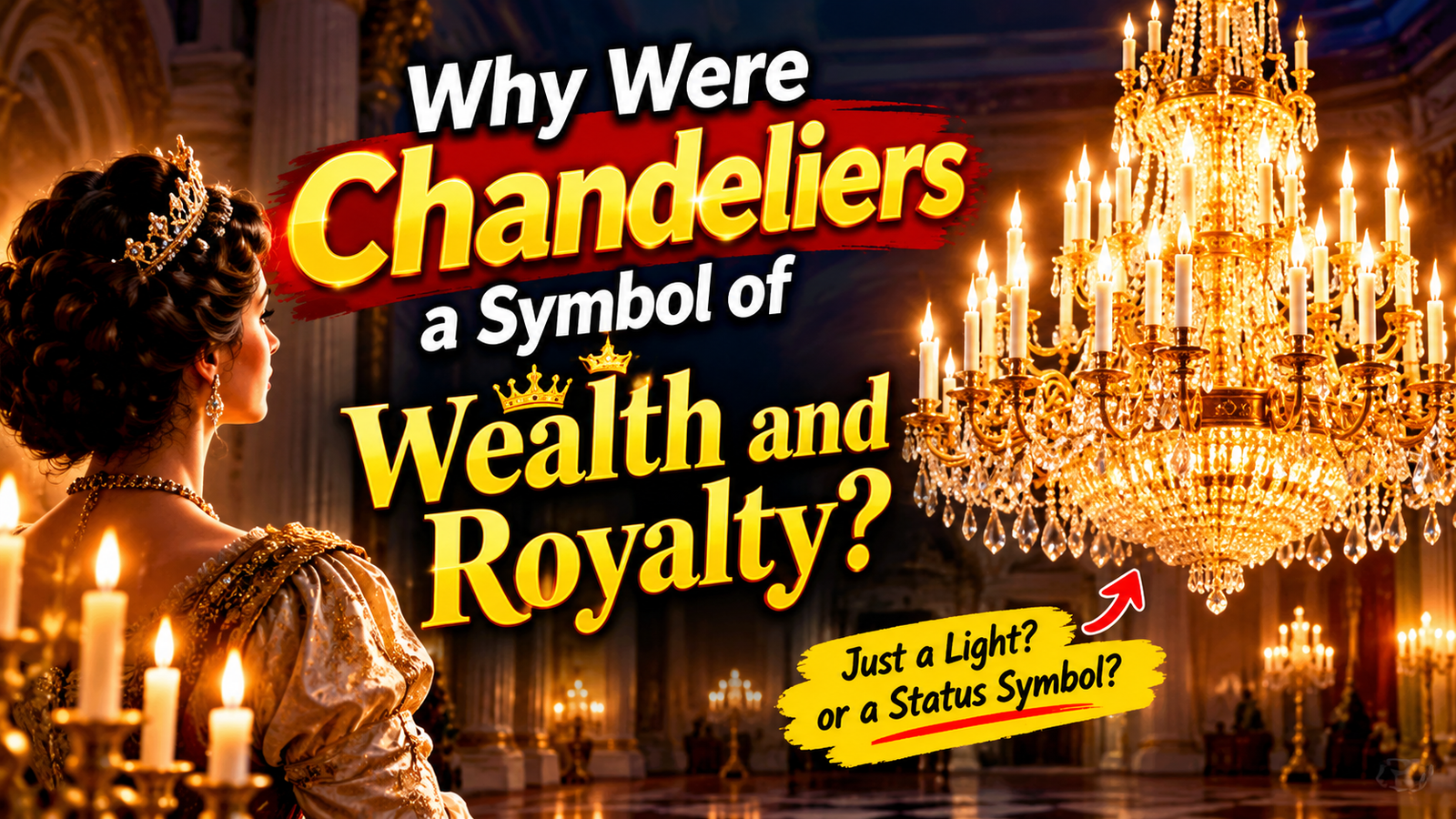
Today, a chandelier might simply mean an expensive-looking light hanging from the ceiling.
But imagine living in a world without electricity.
When the sun went down, darkness wasn’t something you could fix by flipping a switch. Every bit of useful light had to come from something you were willing to burn.
And that’s what made the chandelier so fascinating.
Historically, a chandelier wasn’t just decoration. A brightly lit room could be a very public display of wealth.
Before Electricity, Light Was Expensive
We take artificial light for granted.
Turn on a lamp and you can illuminate an entire room for hours without thinking about where the light comes from.
That wasn’t true for most of history.
Before gas and electric lighting, homes relied heavily on candles, fireplaces, and oil lamps. A fireplace could provide warmth and some light, but it wasn’t an efficient way to brightly illuminate a large room.
Candles were different—but they had a price.
The more candles you burned, the more fuel you consumed.
And if you wanted a room to be genuinely bright, you needed many candles burning at once.
That’s where things became interesting.
You may also like this article :- Why Were Wristwatches Once Considered Women’s Watches?
Not All Candles Were Equal
A candle wasn’t simply a candle.
One of the most common materials was tallow, a rendered animal fat. Tallow candles were relatively affordable, but they could produce smoke and an unpleasant smell.
Beeswax candles were a different story.
They burned more cleanly and had a more pleasant smell, but they were considerably more expensive. The Metropolitan Museum of Art notes that beeswax candles were costly enough that the number and type of candles used in a home could indicate the owner’s wealth and social status.
So imagine walking into two houses at night.
One has a single smoky candle struggling to illuminate a room.
The other has dozens of bright beeswax candles filling the space with warm light.
You didn’t need to see someone’s bank account.
You could see their wealth.
You may also like this article :- Why Did Cars Get Speedometers? The Surprising History of Speed Limits
A Chandelier Turned Light Into a Display
This is where the chandelier became powerful.
Instead of placing one candle here and another candle there, a chandelier could hold multiple candles together, often high above the room.
The result wasn’t just useful illumination.
It was spectacular.
The Metropolitan Museum notes that before gas and electricity, multiple candles were often used in magnificent chandeliers and other lighting fixtures during formal entertainments such as important dinners and balls.
And the number of candles mattered.
More candles meant more light.
More light meant more fuel.
And expensive candles meant even more money being burned.
In a strange way, wealthy households were literally burning their money to show that they could afford to burn it.
Why Chandeliers Became Associated With Royalty
Imagine entering a grand palace in the evening.
The walls are decorated with expensive materials. The furniture is elaborate. And above you hangs a huge chandelier filled with dozens of glowing candles.
The chandelier wasn’t merely there to help people see.
It helped create an atmosphere of power.
Historical accounts even describe extraordinarily large displays of candlelight at royal events. At Versailles, for example, Louis XIV’s famous Hall of Mirrors could be illuminated by enormous quantities of candlelight.
This created an almost magical effect.
The sun had disappeared outside, but inside, the wealthy could create their own artificial daylight.
That’s an important part of the chandelier’s symbolism.
Light itself was becoming a luxury.
You may also like this article :- Why Does a Cricket Wicket Have Three Stumps?
Someone Had to Keep All Those Candles Burning
There’s another part of chandelier history that is easy to overlook.
You couldn’t simply install 20 candles and walk away.
Candles burned down.
Wicks needed attention.
Wax melted.
And every evening, someone had to prepare the lighting again.
Wealthy households often had servants who could handle this work. Historical sources note that wealthy users had enough servants to manage the constant maintenance associated with candle lighting.
So an enormous chandelier represented more than the cost of the fixture.
It represented the candles, fuel, maintenance, and human labor required to keep it shining.
You may also like this article :- Why Are Phone and Calculator Keypads Reversed?
Chandeliers Were Designed to Impress
This also explains why historic chandeliers could be so elaborate.
If a chandelier was going to hang in the center of a grand dining room, ballroom, palace, or mansion, it needed to look impressive even when the candles weren’t burning.
Decorative metalwork, gilding, elaborate branches, and later crystal elements turned lighting equipment into a major piece of interior design.
The chandelier had become both a light source and a status symbol.
You may also like this article :- How 16:9 Became the Standard TV Screen Size
Electricity Changed Everything
Then came gas lighting and eventually electricity.
Suddenly, producing bright artificial light no longer required dozens of expensive candles.
Light became dramatically easier to produce and distribute.
The practical reason for the chandelier largely disappeared.
But the design survived.
And that’s why modern chandeliers are so interesting.
We don’t need them to hold candles anymore.
Yet we still associate their shape with luxury, elegance, palaces, hotels, theaters, and grand homes.
The object survived even after the problem it was designed to solve changed.
The Real Luxury Wasn't the Chandelier
Here’s the fascinating part.
The chandelier itself wasn’t necessarily the most important symbol of wealth.
The light was.
A chandelier simply made that wealth visible.
In a world where darkness was normal and clean artificial light was expensive, filling an entire room with bright, pleasant light was an extraordinary luxury.
Today, we can illuminate a room with the push of a button.
That’s why a chandelier may seem purely decorative to us.
But centuries ago, when someone filled a room with dozens of clean-burning candles, they weren’t just decorating the ceiling.
They were making a statement:
“We can afford to make the night bright.”
You may also like this article :- How Is Rainfall Measured? What 1 mm, 10 mm, or 100 mm of Rain Actually Means
Key Takeaways
- Before gas and electricity, artificial lighting depended heavily on candles and oil lamps.
- Tallow candles were cheaper but generally produced more smoke and odor.
- Beeswax candles burned more cleanly and pleasantly but were expensive.
- The number and type of candles used could signal wealth and social status.
- Chandeliers allowed wealthy households to burn many candles at once, making them both practical lighting devices and symbols of luxury.
- Maintaining large numbers of candles also required time and labor.
- Electricity removed much of the practical need for candle chandeliers, but their association with luxury survived.
FAQs
1. Why were chandeliers a symbol of wealth?
Because before electricity, producing large amounts of clean artificial light was expensive. Wealthy households could afford many candles, particularly costly beeswax candles, making brightly illuminated rooms a visible sign of status.
2. Why did rich people use beeswax candles?
Beeswax candles generally burned more cleanly and smelled better than tallow candles, but they were considerably more expensive.
3. Did chandeliers actually use candles?
Yes. Historical chandeliers were designed to hold multiple candles. Before gas and electric lighting, chandeliers were important sources of artificial illumination, particularly in wealthy interiors.
4. Why did chandeliers become associated with royalty?
Royal palaces and wealthy households could afford elaborate chandeliers and large quantities of candles. The enormous amount of light they produced became part of the visual display of wealth and power.
5. How did electricity change chandeliers?
Electricity removed the need to burn candles for everyday illumination. Chandeliers could then continue as decorative and architectural features while using electric bulbs instead of flames.
6. Where does the word “chandelier” come from?
The English word has roots in Old French and Latin terms associated with candleholders and candles. The French chandelle is related, ultimately tracing back to the Latin candela.
Pingback: Why Are Donkeys Considered Dumb When They’re Actually So Clever?